
How to Index Backlinks
If you spend time building backlinks to your website, one of the biggest frustrations is waiting for Google to actually find and index them.
Backlinks are one of the most important ranking signals in SEO, but they only help your rankings once Google discovers them. If a backlink isn’t indexed, it often has little or no impact on your search visibility.
Over the years of working on websites and experimenting with SEO, I’ve noticed that many people build links but never think about how to index backlinks fast in Google.
In this guide I’ll go through several methods that can help search engines discover and index your backlinks much faster.
Why Backlinks Sometimes Don’t Get Indexed

Before trying to index backlinks quickly, it’s important to understand why some backlinks are never indexed in the first place.
Some common reasons include:
- The linking page is not indexed by Google
- The website rarely gets crawled
- The link is buried deep within the site
- The page has very low authority
- The site blocks search engine crawlers
- The page has little or no content
If Google rarely crawls the website where your backlink is placed, it can take a long time before the link is discovered.
This is why many SEO professionals look for ways to speed up backlink indexing.
Method 1: Make Sure the Linking Page Is Indexed
The first thing to check is whether the page containing your backlink is already indexed in Google.
You can do this by searching:
site:example.com/page-url
If the page doesn’t appear in search results, Google hasn’t indexed it yet.
If the page itself isn’t indexed, then the backlink on that page will also remain undiscovered.
In this situation, you need to focus on getting the page itself indexed first.
Method 2: Use Google Search Console URL Inspection
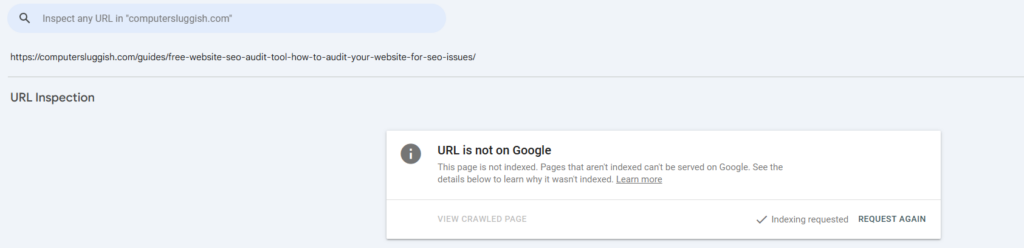
One of the easiest ways to encourage indexing is through Google Search Console.
If you have access to the website containing the backlink, you can use the URL inspection tool.
Steps:
- Open Google Search Console
- Paste the page URL containing your backlink
- Click Request Indexing
This tells Google that the page has been updated and should be crawled again.
Method 3: Create Internal Links to the Page
Another simple method is to add internal links pointing to the page containing your backlink.
Pages that receive internal links are easier for search engines to discover and crawl.
For example, linking the page from:
- blog posts
- category pages
- navigation menus
- related articles
can increase the chances of it being crawled sooner.
Method 4: Share the Page on Social Platforms
Search engines often discover new pages through social signals and shared links.
Sharing the page on platforms such as:
can help search engines find the page more quickly.
While social shares are not direct ranking signals, they can help trigger crawlers to visit the page sooner.
Method 5: Use Backlink Indexing Tools
Many SEO professionals use backlink indexing tools to speed up discovery.
These tools submit URLs to multiple sources or ping services that encourage search engines to crawl them.
Although results can vary, they can sometimes help Google discover backlinks faster.
Method 6: Improve the Page Content
Low-quality pages are less likely to be crawled or indexed quickly.
If possible, ensure the page containing your backlink includes:
- useful content
- proper headings
- internal links
- images or media
Search engines prioritise crawling pages that provide real value to users.
Method 7: Monitor Your Backlinks Properly
Another thing many people forget is monitoring whether their backlinks are actually indexed.
Tracking backlinks and checking their indexing status can help you understand which links are helping your website and which ones are not.
Using SEO monitoring tools makes it easier to track keyword rankings, backlinks, and overall website performance over time.
Technical SEO Still Matters
While backlinks are important, technical SEO issues on your own website can still hold back your rankings.
For example:
- broken internal links
- missing meta descriptions
- duplicate titles
- crawl errors
can all affect how search engines view your site.

When I’m working on websites I usually run a full crawl using a website crawler tool to detect these issues quickly.
Running a crawl can reveal technical problems that might be limiting the impact of your backlinks.
Final Thoughts
Learning how to index backlinks fast in Google can make a big difference to how quickly your SEO efforts start working.
While there’s no guaranteed way to force Google to index a page instantly, using the strategies above can help speed up the process.
Focus on:
- ensuring the linking page is indexed
- improving page quality
- building internal links
- using indexing tools
- monitoring your SEO performance
Over time, this will help search engines discover your backlinks faster and strengthen your overall website authority.