
Top 20 Website Crawlability Issues and How to Fix Them
Website crawlability is one of the most important parts of SEO. Crawlability means how easily search engines like Google can access and read your website pages. If search engines cannot crawl your website properly, they cannot index your pages, and your website will not appear in search results.
Many websites have crawlability issues without the owner even realising it. These problems can stop pages from being indexed, reduce rankings, and prevent search engines from understanding your website. Some crawlability issues are easy to fix, but others can be harder to find unless you scan your website properly.
In this guide, you will learn the top website crawlability issues and how to fix them, even if you are a beginner.
1. Pages Blocked by robots.txt
The robots.txt file tells search engines which pages they can and cannot crawl. If important pages are blocked in robots.txt, search engines will never crawl them.
This often happens by mistake, especially when websites move from development to live mode.
Fix: Check your robots.txt file and make sure important pages are not blocked.
2. Broken Links (404 Errors)

Broken links lead to pages that no longer exist. When search engines encounter broken links, they cannot crawl those pages.
Too many broken links can reduce crawl efficiency and affect rankings.
Fix: Update broken links or redirect them to working pages.
3. Orphan Pages With No Internal Links
Orphan pages are pages that have no internal links pointing to them. Search engines may not find these pages because there is no path leading to them.
This is a very common crawlability issue, especialy on larger websites.
Fix: Add internal links pointing to orphan pages.
4. Slow Website Speed
If your website loads slowly, search engines may crawl fewer pages. This reduces crawl efficiency.
Slow websites also create a poor user experience.
Fix: Improve website speed and optimise images and scripts.
5. Incorrect Redirects

Redirects send users and search engines from one page to another. Incorrect redirects can confuse search engines and reduce crawl efficiency.
Redirect loops are especially bad because they trap crawlers.
Fix: Check redirects and ensure they lead to the correct pages.
6. No XML Sitemap
An XML sitemap helps search engines discover your pages. Without a sitemap, search engines may miss important pages.
Fix: Create and submit an XML sitemap in Google Search Console.
7. Pages Marked as Noindex
Noindex tells search engines not to index a page. If used incorrectly, important pages may not appear in search results.
Fix: Remove noindex from pages that should appear in search results.
8. Poor Internal Linking Structure
Internal links help search engines discover and crawl your pages. If internal linking is weak, search engines may miss important content.
Fix: Add internal links between related pages.
9. Mixed Content Issues
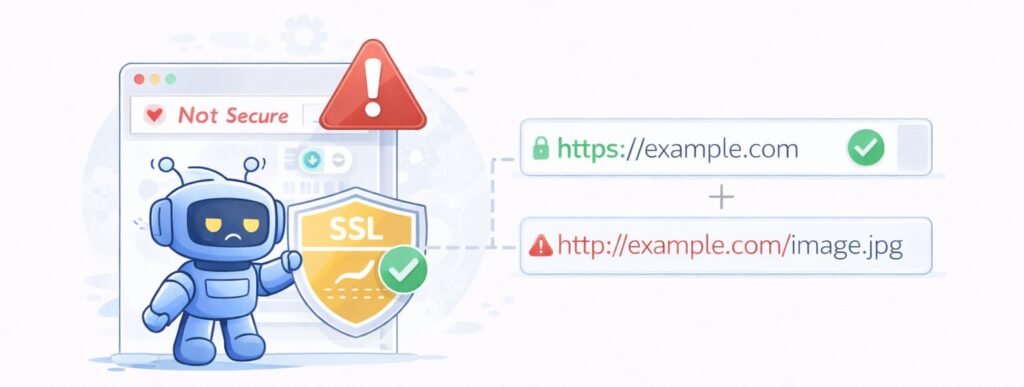
Mixed content happens when some resources load using HTTP instead of HTTPS. This can affect crawlability and security.
Fix: Update all links and resources to use HTTPS.
10. Duplicate Pages
Duplicate pages confuse search engines and reduce crawl efficiency. Search engines may not know which page to index.
Fix: Use canonical tags or remove duplicate pages.
11. Incorrect Canonical Tags
Canonical tags tell search engines which version of a page to index. Incorrect canonical tags can prevent pages from being indexed.
Fix: Ensure canonical tags point to the correct page.
12. Crawl Budget Waste
Search engines limit how many pages they crawl. If crawl budget is wasted on useless pages, important pages may not be crawled.
Fix: Remove unnecessary pages and improve website structure.
13. Server Errors (5xx Errors)
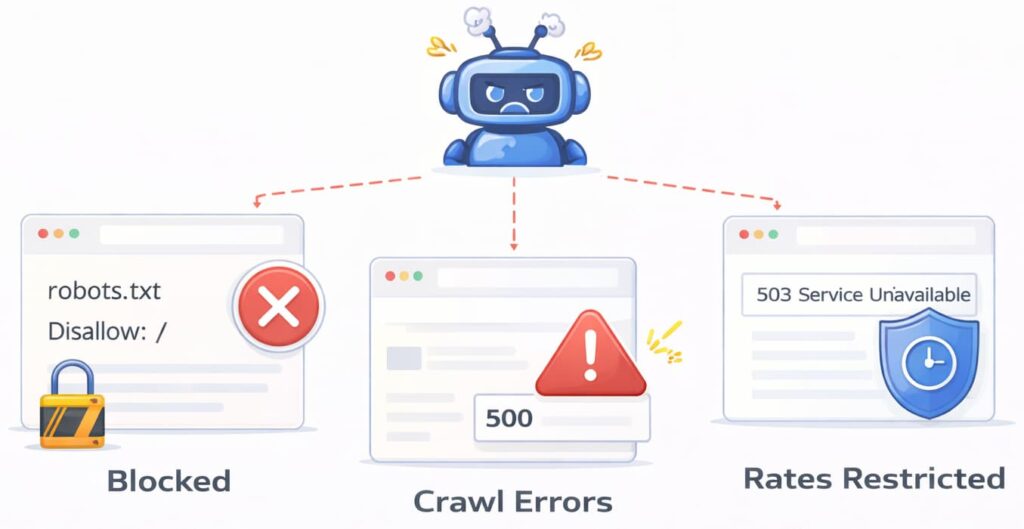
Server errors prevent search engines from accessing your pages.
Fix: Fix server issues and ensure pages load properly.
14. Pages With Too Many Redirects
Too many redirects slow down crawlers and reduce crawl efficiency.
Fix: Reduce redirect chains and link directly to final pages.
15. Blocked JavaScript or CSS Files
Search engines need access to JavaScript and CSS files to understand your pages.
Fix: Ensure important resources are not blocked.
16. Incorrect URL Structure
Poor URL structure makes it harder for search engines to crawl your website.
Fix: Use clear and simple URLs.
17. Internal Links Using HTTP Instead of HTTPS
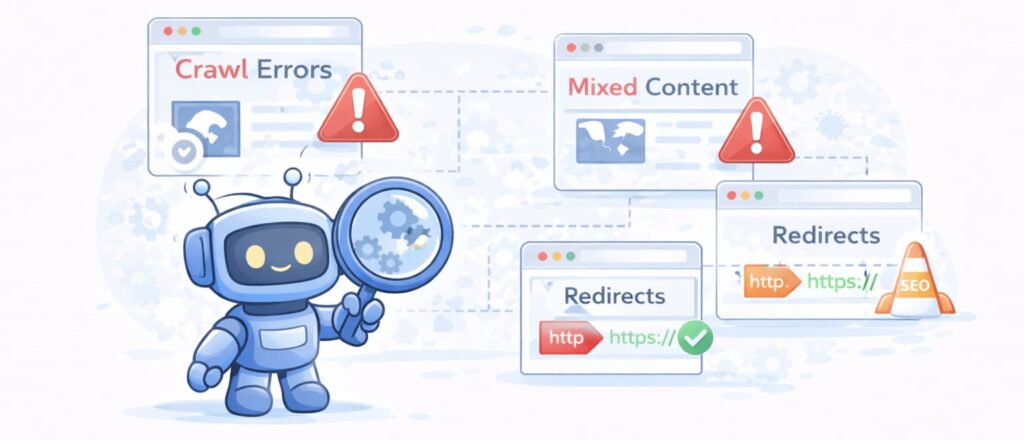
Internal links using HTTP can create crawl issues.
Fix: Update internal links to HTTPS.
18. Pages With Very Low Content
Pages with little content may not be crawled or indexed properly.
Fix: Improve content quality.
19. Incorrect Robots Meta Tags
Robots meta tags control crawling and indexing. Incorrect settings can block pages.
Fix: Check robots meta tags.
20. Website Not Accessible to Crawlers
Sometimes technical problems prevent search engines from accessing your website at all.
Fix: Check crawl access using tools.
How to Check Crawlability Issues on Your Website
The easiest way to find crawlability issues is using SEO crawler tools. These tools scan your website and identify problems affecting crawlability.
Some popular tools include:
- Google Search Console
- Screaming Frog SEO Spider
- Ahrefs Site Audit
- Semrush Site Audit
- CrawlRhino SEO Crawler
These tools show crawl errors, broken links, blocked pages, and indexing problems.
Scanning your website regularly helps prevent crawlability issues.
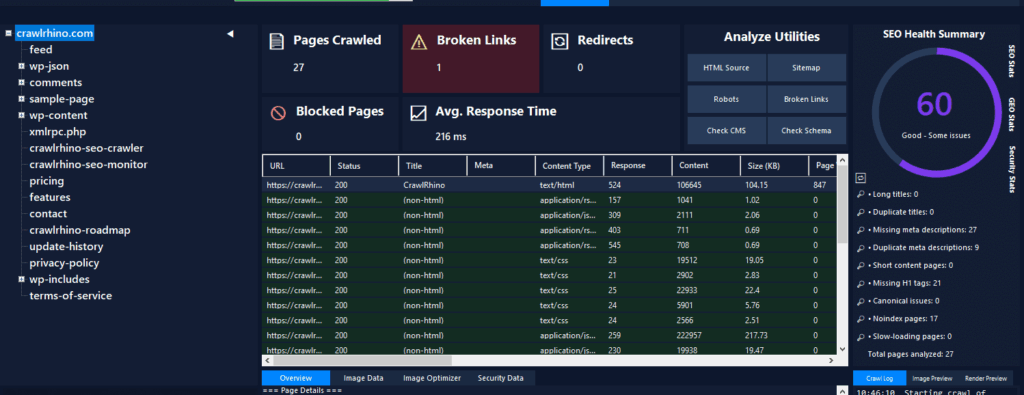
You can download CrawlRhino SEO Crawler here:
https://crawlrhino.com/crawlrhino-seo-crawler/
Why Crawlability Is Important for SEO
If search engines cannot crawl your website, they cannot index it. This means your pages will not appear in search results.
Improving crawlability helps search engines access your pages and improves your chances of ranking higher.
Many websites struggle to rank not because of content, but because search engines cannot crawl their pages properly.
Fixing crawlability issues helps improve rankings and visibility over time.
How to Fix Website Crawlability Issues (Step-by-Step)
Fixing crawlability issues is one of the most important parts of technical SEO and website SEO optimization. When search engines can crawl your website properly, your pages are more likely to be indexed, ranked, and discovered by users. Many SEO agencies and SEO consultants focus heavily on crawlability because it directly affects search visibility.
Below are detailed fixes you can follow to improve your website crawlability.
Fix Broken Links and Crawl Errors
Broken links are one of the most common crawlability problems. These links lead to pages that no longer exist, which causes crawl errors. When search engines encounter broken links, they waste crawl budget and may stop crawling other important pages.
You should regularly scan your website for broken links using SEO audit services tools or website crawler tools. Once you find broken links, update them to point to the correct pages or remove them completely.
If the page was moved, set up a proper redirect to the new page. This ensures search engines and users reach the correct content.
Many professional SEO services and link building services include broken link fixing as part of their technical SEO services because it improves crawl efficiency and overall website health.
Fix Pages Blocked by robots.txt
Your robots.txt file controls which pages search engines can crawl. If important pages are blocked, search engines will never access them.
This often happens when websites are first developed and the robots.txt file blocks everything to prevent indexing. Sometimes this setting is forgotten when the website goes live.
Check your robots.txt file carefully and remove any rules that block important pages. Make sure your main pages, product pages, and blog content can be crawled.
Many technical SEO services include robots.txt optimisation because incorrect settings can prevent websites from ranking completely.
Improve Internal Linking Structure
Internal linking helps search engines discover and crawl your pages. Without internal links, search engines may not find some of your content.
You should link to important pages from other pages on your website. This creates a clear path for search engines to follow.
Strong internal linking is also used by SEO consultants and backlink building experts to improve crawlability and rankings. Internal linking helps distribute authority across your website and makes it easier for search engines to understand your content structure.
Avoid having important pages that are not linked from anywhere else.
Create and Submit an XML Sitemap
An XML sitemap helps search engines discover all pages on your website. Without a sitemap, search engines may miss pages, especially on larger websites.
Create an XML sitemap and submit it to Google Search Console. This helps search engines crawl your website more efficiently.
SEO agencies and technical SEO services often use XML sitemaps to ensure all pages can be discovered.
A sitemap acts like a roadmap for search engines.
Fix Redirect Chains and Redirect Loops
Redirect chains happen when one page redirects to another page, which then redirects again. This slows down search engines and reduces crawl efficiency.
Redirect loops are even worse because they trap search engines and prevent crawling completely.
You should link directly to the final page instead of using multiple redirects. This improves crawl efficiency and helps search engines access your content faster.
Many SEO audit services tools can detect redirect chains and loops automatically.
Fix Mixed Content and HTTPS Issues
Mixed content happens when your website loads some resources using HTTP instead of HTTPS. This can affect crawlability and security.
Update all resources, internal links, and scripts to use HTTPS. This ensures your website is fully secure.
HTTPS is also a ranking factor, and most professional SEO services recommend using HTTPS for all websites.
Secure websites are trusted more by users and search engines.
Improve Website Speed and Performance
Slow websites can reduce crawl efficiency. Search engines may crawl fewer pages if your website loads slowly.
Improve your website speed by optimising images, reducing scripts, and using good hosting.
Many SEO consultants and SEO agencies offer technical SEO services that focus on improving speed and performance.
Fast websites are easier to crawl and rank better in search results.
Remove or Fix Duplicate Content
Duplicate content confuses search engines and reduces crawl efficiency. Search engines may not know which version of a page to index.
Use canonical tags to tell search engines which version of a page is the main version.
Removing duplicate pages improves crawlability and SEO performance.
Many website SEO optimization strategies focus on reducing duplicate content.
Use Website Crawler Tools to Find Crawlability Issues
Website crawler tools can scan your website and identify crawlability problems. These tools are used by SEO agencies, link building services, and SEO consultants to analyse website structure.
These tools can find:
- Broken links
- Crawl errors
- Blocked pages
- Redirect problems
- Internal linking issues
Regular scanning helps keep your website healthy.
Technical SEO services often rely on crawler tools to identify crawl problems quickly.
Why Fixing Crawlability Issues Helps SEO and Rankings
Fixing crawlability issues allows search engines to access your website properly. This improves indexing and increases your chances of ranking higher.
Many businesses invest in SEO services, backlink building, and SEO agency support to improve crawlability and rankings.
Even small crawlability improvements can make a big difference over time.
Search engines prefer websites that are easy to crawl and understand.
Final Thoughts
Website crawlability issues are very common and can affect any website. Fixing crawlability problems helps search engines crawl and index your pages properly.
Regularly scanning your website and fixing crawl issues helps improve SEO and search rankings.
Tools like Google Search Console, Screaming Frog, Ahrefs, Semrush, and CrawlRhino SEO Crawler help identify crawl problems and improve website crawlability.
You can download CrawlRhino SEO Crawler here:
https://crawlrhino.com/crawlrhino-seo-crawler/
Fixing crawlability issues ensures your website can be properly accessed and ranked by search engines.