
What Is Off-Page SEO?
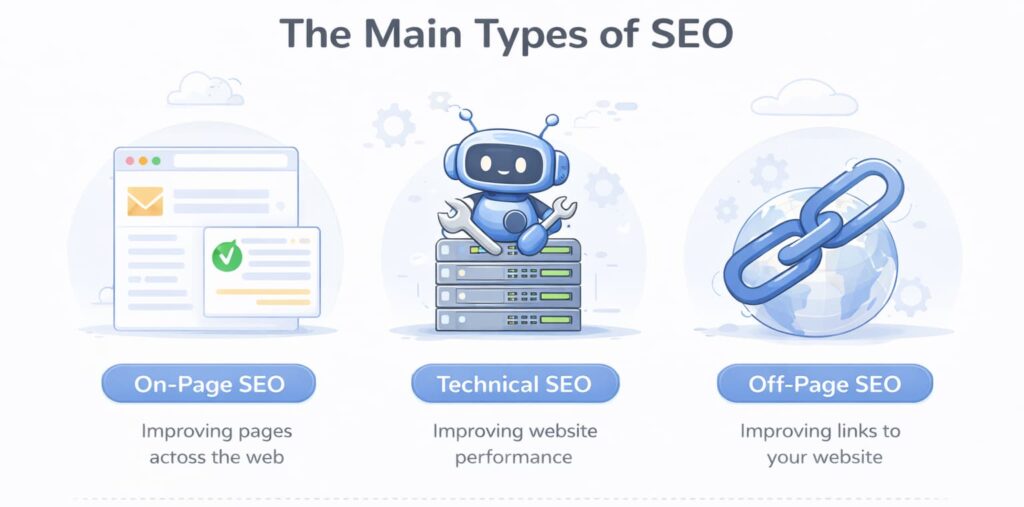
Off-page SEO is everything you do outside of your website to help it rank higher in Google and other search engines. While on-page SEO focuses on your content and technical SEO focuses on how your website works, off-page SEO focuses on your website’s reputation and trust.
The main goal of off-page SEO is to show search engines that your website is trusted, useful, and recommended by other websites. Search engines look at signals like backlinks, mentions, and overall authority to decide how trustworthy your website is. The more trusted your website appears, the more likely it is to rank higher in search results.
For example, if several good websites link to your website, Google sees that as a sign that your website is helpful. This increases your chances of appearing higher when people search for related topics. This is why off-page SEO is such an important part of improving search rankings.
Why Off-Page SEO Is Important for Rankings
Off-page SEO plays a huge role in how search engines decide which websites to show first. Even if your website has great content, it may struggle to rank if no other websites link to it. Search engines use backlinks as a signal of trust, similar to recommendations.
Think of backlinks like votes. Each link from another website is like a vote saying your website is useful. Websites with more high-quality votes usually rank higher. However, not all links are equal. Links from trusted, relevant websites are much more valuable than links from low-quality or unrelated websites.
If your website has no backlinks at all, search engines may not trust it yet. This is one of the main reasons new websites struggle to rank. Building off-page SEO signals helps search engines see your website as more reliable over time.
What Are Backlinks in Off-Page SEO
Backlinks are links from other websites pointing to your website. These are one of the most important off-page SEO ranking factors. When another website links to yours, it helps search engines discover your pages and understand that your website has value.
For example, if a blog writes about SEO tools and links to your website, that is a backlink. Search engines see this as a positive signal. Backlinks also help search engines crawl your website faster because crawlers follow links to discover new pages.
Tools such as Ahrefs, Semrush, Google Search Console can help you find backlinks pointing to your website. These tools show which websites link to you and help you monitor your off-page SEO progress.
Types of Backlinks That Help SEO
Not all backlinks help equally. Some backlinks are much stronger than others. The best backlinks usually come from websites that are trusted, relevant, and active.
For example, backlinks from websites related to SEO, technology, or business are more useful if your website is about SEO. These links help search engines understand your website’s topic and improve your rankings.
Backlinks from spammy or unrelated websites are less helpful and may not improve rankings. Search engines focus on quality rather than quantity.
Getting backlinks naturally over time is the safest and most effective method.
How Search Engines Use Off-Page SEO Signals
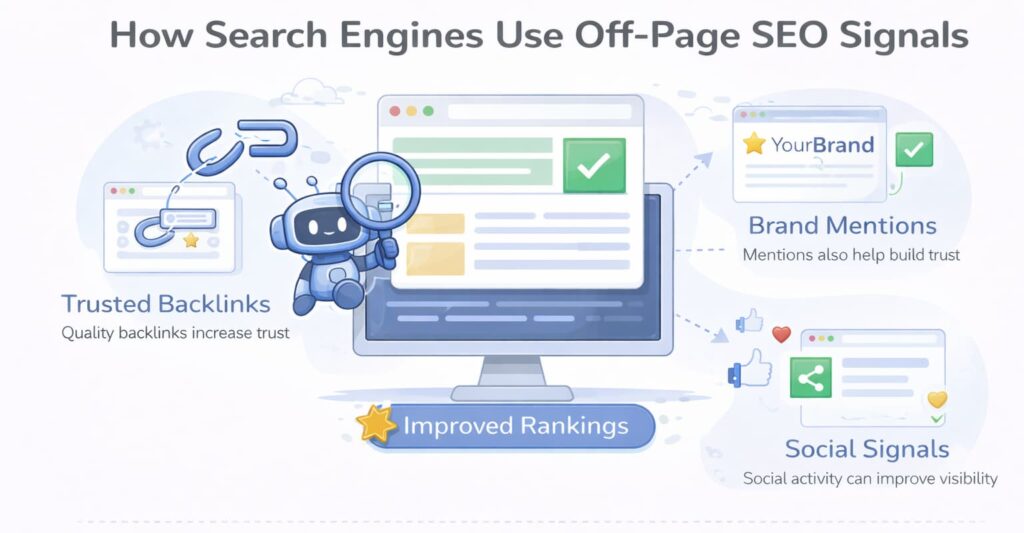
Search engines use off-page SEO signals to measure trust and authority. Authority is how trustworthy your website appears compared to others.
If your website has many trusted backlinks, search engines are more likely to rank it higher. If your website has no backlinks, search engines may see it as new or unproven.
Off-page SEO also helps search engines discover your website. When other websites link to your pages, search engine crawlers can follow those links and index your content faster.
Website crawlers and SEO tools like Google Search Console, Ahrefs, Semrush, Screaming Frog, and CrawlRhino SEO Crawler can help identify crawl paths, links, and indexing issues. These tools help ensure search engines can access your website properly.
You can download CrawlRhino SEO Crawler here:
https://crawlrhino.com/crawlrhino-seo-crawler/
Other Off-Page SEO Factors Besides Backlinks
Backlinks are the most important off-page SEO factor, but they are not the only one. Search engines also look at other signals that show your website is trusted.
Brand mentions can help build trust. Even if a website mentions your brand without linking, search engines may still use that as a signal.
Social media activity can also help. While social media links do not directly improve rankings in most cases, they help bring visitors to your website and increase visibility.
Online directories and listings can also help search engines discover your website. These include business listings, profiles, and website directories.
All of these signals help build your website’s reputation.
How Off-Page SEO Helps Google Crawl and Index Your Website
Off-page SEO helps search engines discover and crawl your pages. When other websites link to your pages, search engines can follow those links and find your content faster.
This is especially important for new websites. Without backlinks, search engines may take longer to discover your pages.
SEO crawling tools such as Screaming Frog, Ahrefs, Semrush, Google Search Console, and CrawlRhino SEO Crawler can help check crawlability and identify technical issues that may affect indexing.
You can download CrawlRhino SEO Crawler here:
https://crawlrhino.com/crawlrhino-seo-crawler/
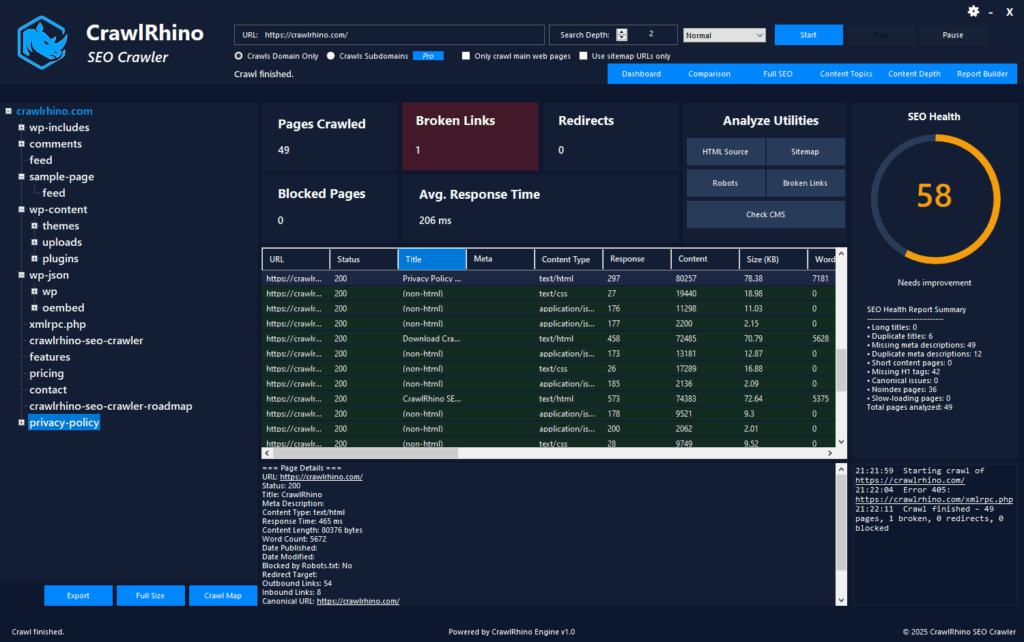
These tools help ensure your website can be crawled properly, which is important for rankings.
How to Start Improving Off-Page SEO
The best way to improve off-page SEO is by creating useful content. When your content is helpful, other websites are more likely to link to it naturally.
You can also create profiles on relevant platforms and list your website. This helps search engines discover your website and builds trust.
Monitoring your backlinks regularly helps ensure your website is growing properly. SEO tools can help track backlinks and identify potential issues.
Improving off-page SEO takes time, but it is one of the most effective ways to increase rankings.
Common Off-Page SEO Mistakes
One common mistake is trying to get too many backlinks too quickly. Search engines prefer natural growth. Sudden spikes in backlinks can look unnatural.
Another mistake is getting backlinks from low-quality websites. These links usually do not help and can sometimes cause problems.
Some website owners focus only on backlinks and ignore technical SEO. Both technical SEO and off-page SEO work together.
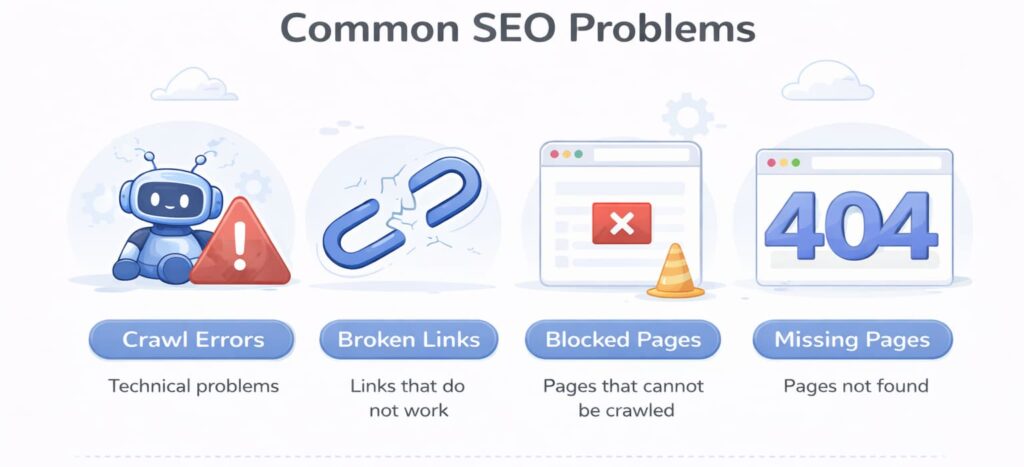
Fixing crawl errors, broken links, and technical issues helps search engines trust your website.
How Long Off-Page SEO Takes to Work
Off-page SEO takes time to show results. Search engines need time to crawl links, evaluate trust signals, and update rankings.
New websites may take several weeks or months before seeing improvements.
Consistent improvements help build authority over time.
SEO is a long-term process, but it can bring steady traffic once your website starts ranking.
Final Thoughts
Off-page SEO is an essential part of improving search rankings. It helps search engines understand your website’s trust, authority, and popularity.
Backlinks, mentions, and external signals help search engines discover and trust your website. Combined with good technical SEO and helpful content, off-page SEO helps your website rank higher.
Using tools like Google Search Console, Ahrefs, Semrush, Screaming Frog SEO Spider, and CrawlRhino SEO Crawler can help monitor your website’s health and ensure search engines can crawl your pages properly.
Improving off-page SEO takes time, but it is one of the most effective ways to grow your website and increase traffic.