
What Is SEO – Search Engine Optimization?
Search Engine Optimization, usually called SEO, is the process of improving your website so it appears higher in search results on Google and other search engines. When someone searches for something like “plumber near me” or “how to fix a slow computer,” search engines show a list of websites. SEO helps your website appear in those results so people can find you.
SEO is important because most people never go past the first page of Google. If your website appears higher in the results, more people will visit it. If your website appears lower or not at all, people may never find it, even if your website is good. SEO helps search engines understand your website and helps users find the information, products, or services you offer.
Search engines like Google use automated programs called crawlers or bots to discover websites and read their pages. These crawlers scan websites, follow links, and store information about each page in a massive database called the index. When someone searches for something, Google uses this index to decide which websites to show and in what order. SEO helps ensure your website can be crawled, indexed, and ranked properly.
Why SEO Is Important for Websites
SEO is important because it helps bring free traffic to your website. This traffic is called organic traffic, which means visitors find your website naturally through search engines rather than paid advertisements. Organic traffic is valuable because people are actively searching for something related to your website, which means they are more likely to be interested in what you offer.
For example, if you own a website that sells computer repair services, you want your website to appear when someone searches “computer repair near me.” If your website is optimized properly, Google can show your website in the results. Without SEO, your website may exist, but people may never find it.
SEO also helps build trust and credibility. Websites that appear higher in search results are often seen as more trustworthy. Search engines try to show the best and most helpful websites first, so appearing higher makes your website look more reliable to visitors.
How Search Engines Work
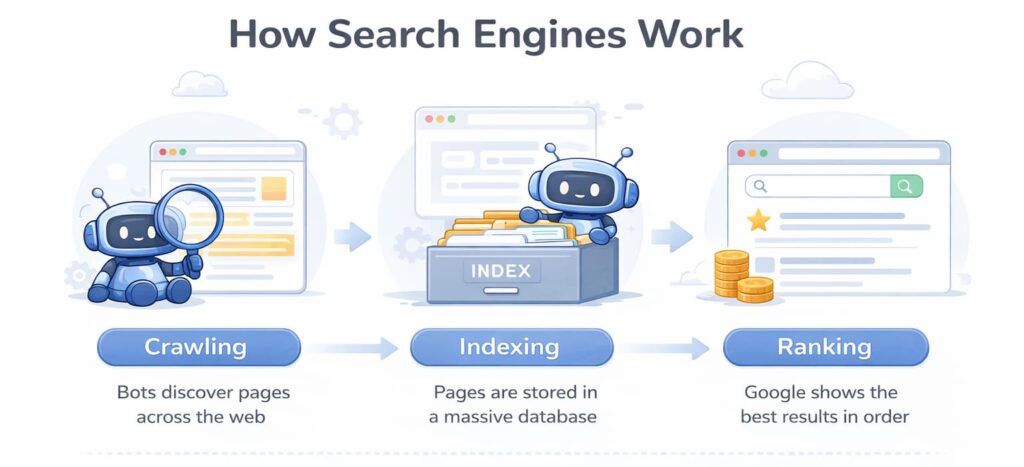
To understand SEO, it helps to understand how search engines work. Search engines perform three main steps: crawling, indexing, and ranking.
Crawling is when search engine bots visit websites and follow links to discover new pages. These bots move from page to page, collecting information about the website. If your website has broken links, crawl errors, or blocked pages, search engines may not be able to crawl your website properly.
Indexing is when search engines store the information they find. Once a page is crawled, it is added to the search engine’s database. This database contains billions of pages. If your page is not indexed, it will not appear in search results.
Ranking is when search engines decide which pages appear first. Google uses many factors to decide rankings, including content quality, website structure, speed, and links. SEO helps improve these factors so your website can rank higher.
Tools such as Google Search Console, Screaming Frog SEO Spider, Ahrefs Site Audit, Semrush Site Audit, and CrawlRhino SEO Crawler can help check whether your website can be crawled and indexed properly. These tools scan your website and identify problems that may prevent search engines from accessing your pages.
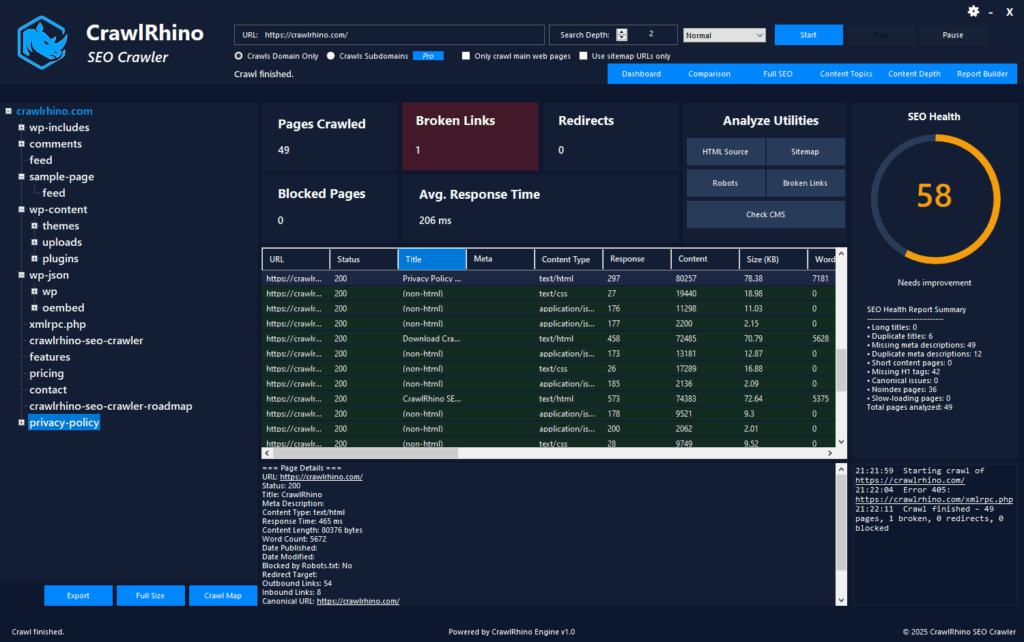
You can download CrawlRhino SEO Crawler here:
https://crawlrhino.com/crawlrhino-seo-crawler/
The Main Types of SEO
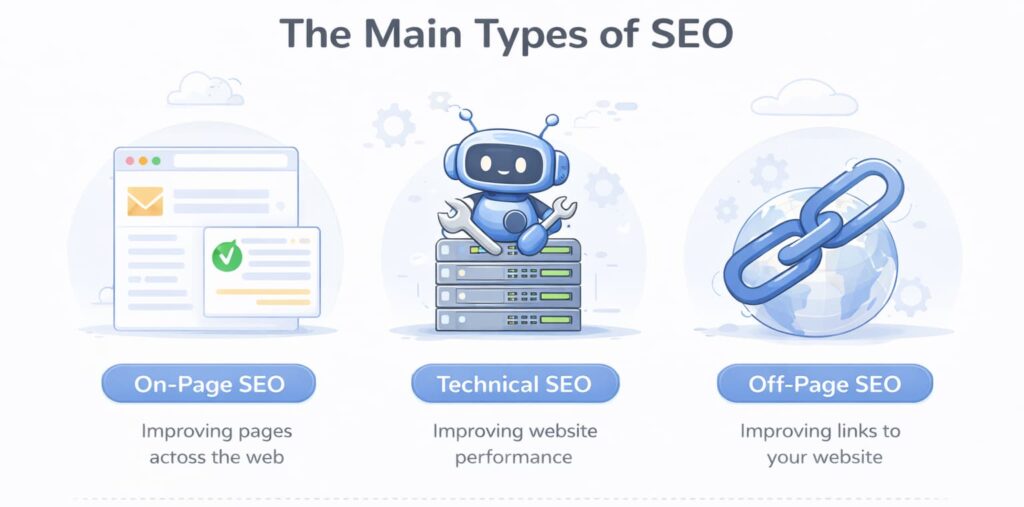
SEO is usually divided into three main areas: on-page SEO, technical SEO, and off-page SEO. Each of these areas focuses on different aspects of improving your website.
On-page SEO focuses on the content and structure of your pages. This includes writing helpful content, using clear page titles, and making sure your pages explain their topic properly. Search engines try to understand what each page is about, so clear and useful content helps improve rankings.
Technical SEO focuses on how your website works behind the scenes. This includes making sure your website loads quickly, has no broken links, and can be crawled by search engines. Technical problems such as crawl errors, broken pages, or blocked pages can prevent search engines from indexing your website.
Off-page SEO focuses on links from other websites. These links are called backlinks. When other websites link to your website, it helps search engines see your website as more trustworthy. Websites with more high-quality backlinks often rank higher.
How Crawling and Indexing Affect SEO
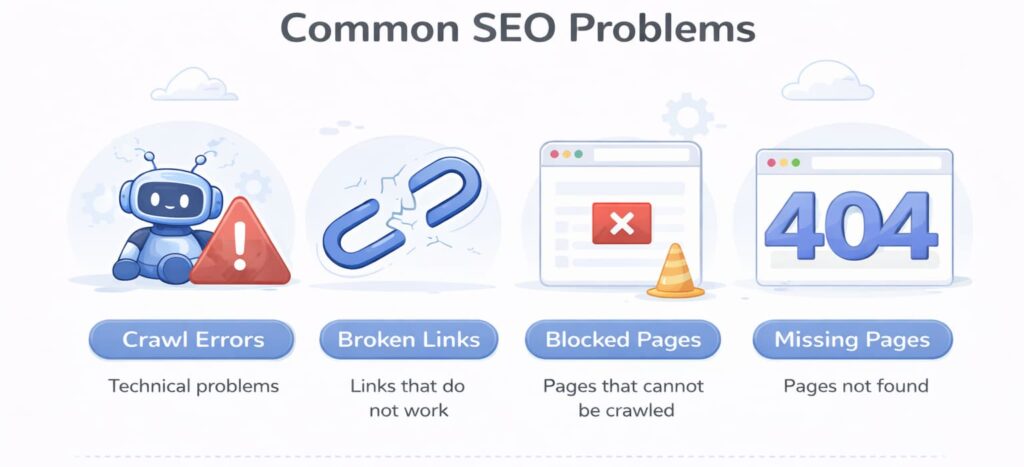
One of the most important parts of SEO is making sure search engines can crawl and index your website. If search engines cannot access your pages, they cannot show them in search results.
Problems such as broken links, crawl errors, robots.txt blocks, and missing pages can prevent indexing. This is why regularly scanning your website is important. Tools such as Google Search Console, Screaming Frog, Ahrefs, Semrush, and CrawlRhino SEO Crawler can scan your website and identify crawl problems, indexing issues, and technical errors.
Fixing these problems helps search engines access your pages properly and improves your chances of appearing in search results.
How Long SEO Takes to Work
SEO does not work instantly. It usually takes time for search engines to crawl and index changes. New websites may take weeks or months before appearing in search results.
Search engines need time to discover your website, crawl your pages, and evaluate your content. Improving your website gradually helps build trust with search engines.
Regular updates, fixing technical problems, and improving content help improve rankings over time.
Common SEO Mistakes Beginners Make
Many beginners create websites but forget to optimize them properly. One common mistake is not checking whether search engines can crawl the website. If pages are blocked or have crawl errors, they may never appear in search results.
Another common mistake is having broken links or missing pages. These problems make it harder for search engines to crawl the website.
Some websites also have very little content, which makes it difficult for search engines to understand what the website is about.
Regularly checking your website using tools such as Google Search Console, Screaming Frog, Ahrefs, Semrush, or CrawlRhino SEO Crawler helps identify these problems early.
Why Technical SEO Is Important
Technical SEO ensures your website works properly for search engines. Even if your content is good, technical problems can prevent your website from ranking.
Technical SEO includes fixing crawl errors, improving website speed, fixing broken links, and making sure your website structure is clear. These factors help search engines crawl and index your pages more efficiently.
A well-structured website makes it easier for search engines to understand your content.
How SEO Helps Grow Your Website
SEO helps bring consistent traffic to your website over time. Unlike paid ads, which stop when you stop paying, SEO can bring traffic continuously.
Once your website ranks well, it can attract visitors every day without additional cost. This makes SEO one of the most effective long-term ways to grow a website.
Whether you run a business, blog, or online store, SEO helps people find your website.
Final Thoughts
SEO, or Search Engine Optimization, is the process of improving your website so search engines can find, crawl, and rank your pages. It helps bring organic traffic to your website and improves your visibility online.
Search engines must be able to crawl and index your website properly. Fixing crawl errors, broken links, and technical problems helps improve SEO.
Tools such as Google Search Console, Screaming Frog SEO Spider, Ahrefs, Semrush, and CrawlRhino SEO Crawler help identify problems that may prevent search engines from accessing your website.
You can download CrawlRhino SEO Crawler here:
https://crawlrhino.com/crawlrhino-seo-crawler/
SEO takes time, but improving your website gradually helps increase traffic, improve rankings, and grow your website over the long term.