
The Hidden Problem: Most Websites Look Fine but Don’t Actually Work
Many business websites appear professional at first glance. They have images, service pages, and contact forms. From a visual standpoint, nothing looks obviously broken. However, despite this, many of these websites generate very few enquiries or leads.
This isn’t always caused by lack of traffic. In many cases, visitors are reaching the website but choosing not to engage further. They leave without making contact, submitting a form, or taking any meaningful action.
In my personal experience analysing business websites, the underlying issue is often not the business itself, but how the website was built. A website can look modern on the surface but still suffer from technical and structural problems that reduce trust, performance, and overall effectiveness.
In many cases, these problems go beyond just speed or SEO. I’ve seen websites where contact forms don’t work correctly, emails are never delivered, or form submissions simply fail without the business realising. This can result in lost enquiries without any obvious warning.
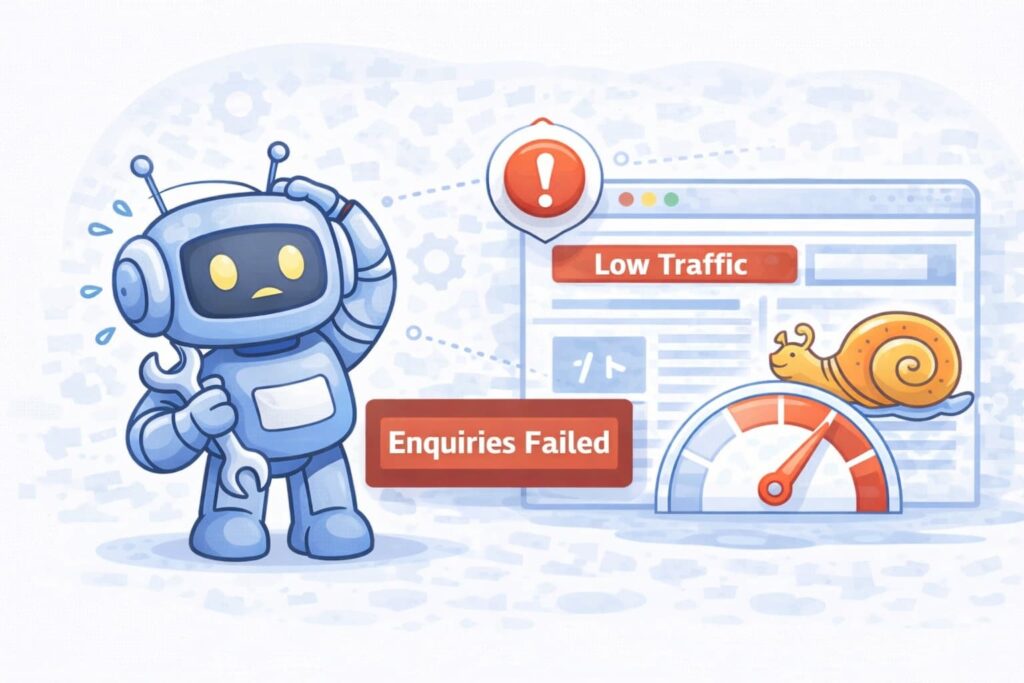
Excessive pop-ups, aggressive promotional banners, or poorly implemented scripts can also create a frustrating experience. When visitors are immediately faced with multiple distractions, or pop-ups that are difficult to close, it often drives them away before they’ve even had a chance to engage with the website.
From a user’s perspective, these issues create uncertainty. If something feels broken, slow, or unreliable, visitors are far less likely to trust the business or take the next step.
From a technical perspective, these problems usually indicate deeper structural issues with how the website was built.
Proper website design goes far beyond appearance. It directly affects how users perceive the business and how easily they can interact with it.
Trust Is Built in Seconds, Often Without the User Realising
When someone visits a business website, they subconsciously evaluate its quality almost immediately. This includes:
- how fast the website loads
- how smooth the experience feels
- whether the layout feels clean and professional
- how stable and responsive the site appears
Even small delays or technical issues can reduce trust.
Users may not consciously think, “this website is slow,” but they often form a negative impression based on how the website behaves. This can result in them leaving and choosing a competitor instead.
This is one of the most overlooked aspects of website performance. Many business owners focus heavily on content and visuals but underestimate the importance of technical quality and performance.
Poor Technical Structure Reduces Enquiries Without Being Obvious
Many websites are built using heavy page builders, excessive plugins, or poorly optimised themes. While these tools make it easier to create websites quickly, they often introduce technical overhead that affects performance.
Common hidden issues include:
- excessive JavaScript execution
- inefficient layout rendering
- delayed page interaction readiness
- unnecessary background processes
These problems may not be visible directly, but they affect how smooth and responsive the website feels to users.
Search engines also evaluate these factors. Poor technical structure can affect crawlability, indexing efficiency, and overall search visibility.
This means the website not only converts fewer visitors but may also receive fewer visitors in the first place.
User Experience Directly Affects Conversion Behaviour

Users expect websites to feel fast and stable. If navigation feels slow, inconsistent, or unresponsive, it creates friction.
Friction reduces conversion.
Even if the business offers excellent services, a poorly built website can create doubt.
In my opinion, this is one of the biggest reasons many business websites fail to generate consistent enquiries. The website unintentionally creates hesitation.
Users may not consciously identify the cause, but they instinctively gravitate toward websites that feel faster, cleaner, and more reliable.
This is often the difference between a visitor leaving and a visitor becoming a customer.
Technical Analysis Often Reveals Problems Business Owners Don’t Realise Exist
Many website issues are not obvious without proper technical analysis.
When analysing websites, tools such as browser developer tools, PageSpeed Insights, and technical crawlers can reveal hidden inefficiencies.
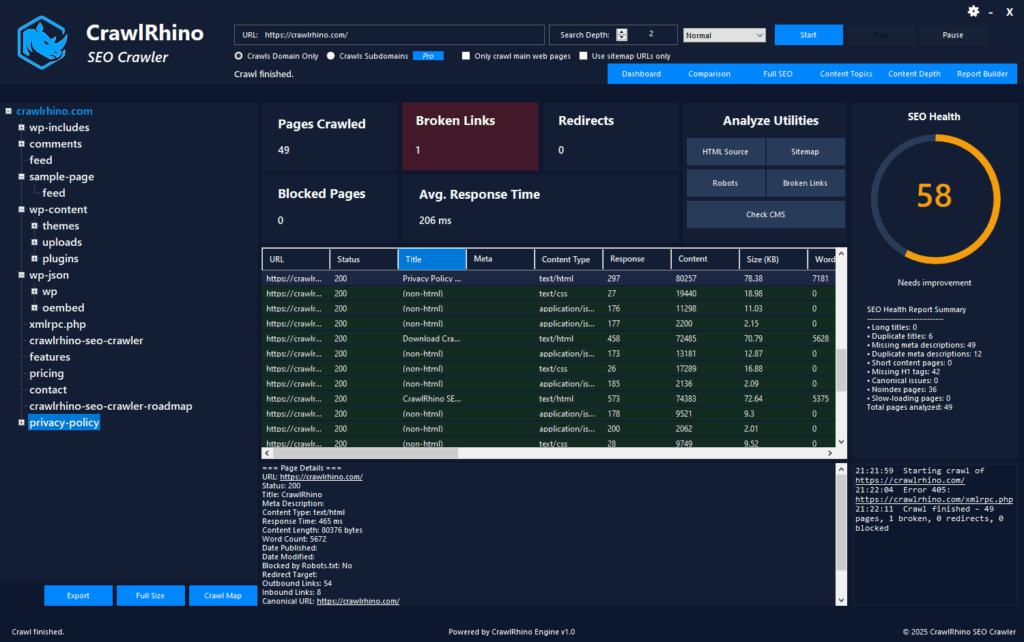
This is one of the reasons I developed the CrawlRhino SEO Crawler. It helps identify technical and structural problems that can affect both search engine visibility and overall website performance.
Issues such as inefficient page structure, unnecessary resource loading, and technical inconsistencies can all reduce performance and affect how users interact with the website.
Without analysing the website properly, these problems can remain undetected for years.
How Proper Website Design Improves Enquiry Rates

Websites built using proper design principles avoid these problems from the start.
Key characteristics of properly built websites include:
- efficient technical structure
- lightweight, clean code
- fast loading performance
- stable and responsive user experience
These technical improvements have a direct effect on user behaviour.
Visitors are more likely to trust and interact with websites that feel reliable and well built.
For businesses looking for website design in Salisbury or elsewhere in the UK, working with a web designer who understands performance and technical quality can significantly improve long-term results.
Websites built with performance and usability in mind, such as those developed by Timeless Web Builders, are designed to provide a smooth, reliable experience that supports both search visibility and customer engagement.
Why Many Businesses Don’t Realise Their Website Is the Problem
One of the challenges is that website issues often develop gradually.
A website may have been built years ago using methods that were acceptable at the time but are now outdated.
Over time, performance standards have increased. Search engines now evaluate technical quality more heavily, and users expect faster, smoother experiences.
Business owners may not realise their website is underperforming because there is no obvious failure. The website still loads and functions, but it doesn’t perform optimally.
This silent underperformance can significantly reduce enquiries over time.
Proper Website Design Is an Investment in Long-Term Business Growth
A properly built website does more than simply present information. It supports the business by providing a stable, fast, and trustworthy platform for customers.
In my personal experience, businesses that invest in properly built websites benefit from:
- better search visibility
- improved user trust
- increased enquiry rates
- better long-term reliability
These improvements are not always immediate, but they create a strong foundation that supports ongoing business growth.
Final Thoughts
Many business websites fail to generate enquiries not because of the business itself, but because of technical and structural weaknesses in the website.
Users are highly sensitive to performance, stability, and overall experience, even if they are not consciously aware of it.
Proper website design eliminates many of these problems by ensuring the website is fast, efficient, and reliable from the beginning.
For businesses that rely on their website to attract customers, investing in properly built, performance-focused website design can make a significant difference in both visibility and enquiry generation over time.